










The short answer
A denture reline adds new material to the fitting surface so it sits snugly on gums that have shrunk. A rebase replaces the whole pink base but keeps the teeth. A new denture is the better answer when the teeth are worn, the bite has collapsed or the denture is old. Your dentist decides which after examining your mouth.
Key points
- Dentures loosen because the jaw changes. Bone keeps shrinking after teeth are lost, so a denture that fitted well slowly stops matching the gums underneath.
- A reline refits the surface that touches your gums. It can be hard or soft, and done at the chair or in a lab.
- A rebase replaces the whole base and keeps your existing teeth, which suits a denture with good teeth on a worn or cracked base.
- A new denture is the honest answer when the teeth are worn flat, the bite has dropped, or the gums are inflamed and overgrown.
- Implants are one option, not the default. They involve surgery with real risks, results vary, and relining or remaking a conventional denture is a reasonable alternative.
Jump to a section 11
- Loose denture options compared at a glance
- Why dentures become loose over time
- Signs your denture no longer fits properly
- What a denture reline involves
- When a rebase makes more sense than a denture reline
- When a new denture is the honest answer
- How often dentures should be relined and checked
- Where dental implants fit for a loose denture
- Risks of implant treatment and the alternatives to it
- What changes the cost of fixing a loose denture
- Common questions
Loose denture options compared at a glance
There are three main ways to deal with a denture that no longer fits, plus implants as a further option for some people. The table sets out what each one does and when it tends to suit. Which is right for you depends on your gums, your bone, the state of the denture and what you want from it.
Every figure in this guide comes from a published study or a health authority, linked where it appears, and none of them describes results at our clinic.
| Option | What it does | When it tends to suit | What to know |
|---|---|---|---|
| Reline (hard) | Adds a new layer of rigid acrylic to the fitting surface | Healthy gums and a denture whose teeth and bite are still sound | Done at the chair in one visit or in a lab, which means time without the denture |
| Reline (soft) | Adds a cushioning layer to the fitting surface | Tender gums or a thin, sharp ridge that gets sore | Wears out sooner than hard material and is more prone to collecting microbes |
| Rebase | Replaces the whole pink base and keeps the existing teeth | Good teeth on a base that is cracked, heavily repaired or worn | A lab job, so the denture is away for a while |
| New denture | Makes a fresh denture from new impressions | Worn teeth, a collapsed bite, an old denture or large changes in the jaw | More visits, and a settling in period |
| Implant overdenture | Clips a removable denture onto implants in the jaw | People who still struggle with a well made denture and are suitable for surgery | Surgery with real risks, and the attachments need maintenance |
Why dentures become loose over time
When teeth are removed, the bone that held them starts to shrink, and it keeps changing for the rest of your life. A literature review of denture relining by Kubo and colleagues calls this bone resorption the main cause of dentures losing their fit, and describes it as chronic, progressive and cumulative.
The denture itself does not shrink. It was shaped to your gums as they were on the day it was made, so as the ridge underneath flattens, a gap opens between the two. That is when a denture starts to rock, lift when you talk, or trap food underneath.
The Victorian Government’s Better Health Channel says all dentures may need relining or replacing after a while as the gums change with age, and that an immediate denture, fitted on the day teeth are removed, may need adjusting and relining within a few months.
- Age, diabetes and osteoporosis are among the general health factors Kubo and colleagues list as affecting how fast bone is lost.
- How long you have been without teeth and the force a denture puts on the gums both play a part, according to the same review.
- Relining frequency, gender and denture material were all linked with the rate of lower jaw bone loss in a systematic review by Pham and colleagues that pooled 19 longitudinal studies.
Signs your denture no longer fits properly
A loose fit rarely arrives overnight, so it is easy to get used to it and reach for more adhesive. These are the signs that it is worth having the denture checked:
- It lifts, drops or clicks when you talk or eat.
- Food keeps getting trapped underneath.
- You need more adhesive than you used to, or it no longer helps.
- You have sore spots, ulcers or red, swollen gums under the denture.
- There is a fold of extra gum tissue where the edge of the denture sits.
- The denture is cracked, has been repaired several times, or the teeth look worn flat.
Why a loose denture is worth fixing
A clinical study of 210 denture wearers by Mubarak and colleagues found oral lesions in 20.5% of them, the commonest being overgrowth of gum tissue caused by unstable dentures or overextended edges. A case report on denture induced overgrowth notes that long term irritation from a poorly fitting denture may predispose to cancer, so a sore that does not heal should always be looked at.
What a denture reline involves
A reline keeps your denture as it is and adds new material to the side that sits on your gums, so the fit matches your mouth again. The teeth, the bite and the outside of the denture stay the same. It is the least disruptive fix, and it only works if those other parts are still sound.
Hard reline at the chair or in a lab
A chairside reline is done in one visit: the material is placed in the denture, seated in your mouth to take the shape of your gums, then set and polished. Kubo and colleagues describe it as a simple technique that means you are not left without your denture.
A lab reline uses your own denture as the tray for an impression, then a technician adds the new acrylic. The same review rates it ahead of the chairside method for durability, detail and lower porosity. The trade off is that the denture is away for a while, and the extra steps leave more room for error.
Soft reline for tender gums
A soft reline adds a cushioning layer between the denture and the gums. A systematic review of soft denture liners by Hasegawa and colleagues, published in 2024, found they improved satisfaction, chewing ability and quality of life for people with full dentures.
The same review found soft material does not last as long as hard reline material and is more susceptible to microbial contamination over time, and it rated the risk of bias in the included studies as tending to be high. A soft reline usually needs more frequent checks and replacing.
Tissue conditioning when the gums are sore
If the gums under a denture are inflamed or ulcerated, a reline taken over them would copy the swelling. Kubo and colleagues note that the mouth and gums need to be healthy before a definitive reline, and that a short term tissue conditioner is the usual first step until they settle.
When a rebase makes more sense than a denture reline
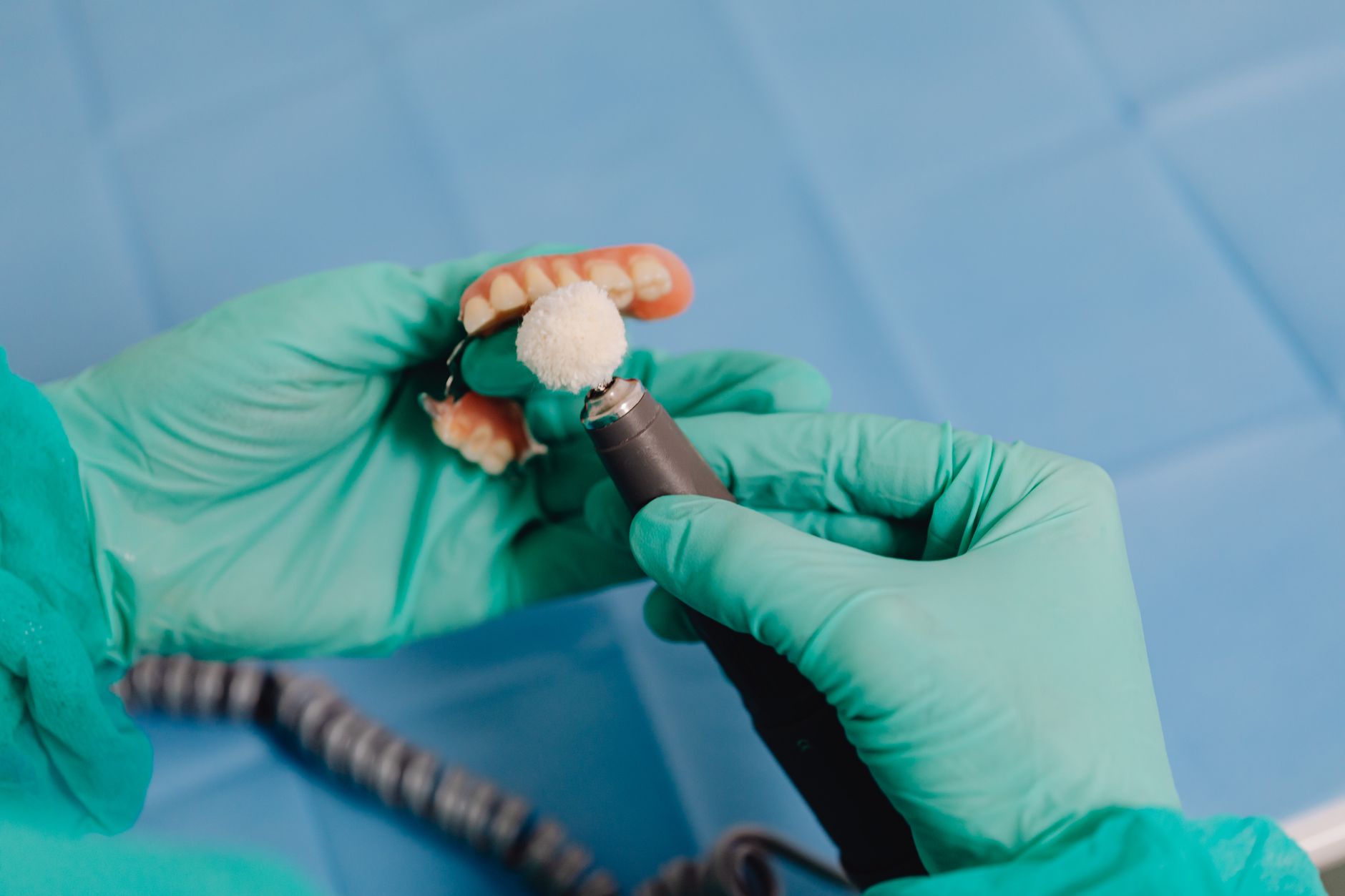
A rebase goes further than a reline. The teeth are kept in their exact positions, and the pink base they sit in is replaced with new acrylic, shaped to a fresh impression of your gums.
It tends to suit a denture whose teeth are still in good condition and whose bite is still right, but whose base is cracked, patched from several repairs, discoloured, or worn too thin to take another layer. The review by Kubo and colleagues groups relining and rebasing together as the two ways of refitting an existing denture.
Because the whole base is remade, a rebase is a lab job. Ask how long the denture will be away and whether a spare or temporary option is possible while it is.
When a new denture is the honest answer
A reline or rebase only fixes the fit. If the problem is the teeth or the bite, refitting the base just gives you a well fitting version of the wrong denture. Kubo and colleagues list the situations where relining is not recommended:
- Heavily worn or badly positioned teeth on the denture.
- Uneven contacts where some teeth hit before others when you bite.
- A collapsed bite, where the denture teeth have worn so far that the face looks shorter, described in the review as a loss of vertical dimension of more than 3 mm.
- Inflamed or overgrown gums under the denture, which need treating first.
How old the denture is matters too
The Better Health Channel notes that a denture sometimes has to be remade when there has been a lot of bone and gum shrinkage. The Cleveland Clinic’s guide to dentures puts the average lifespan of a denture at seven to ten years.
Timing also seems to matter. A study by Taylor and colleagues of 187,227 Australian adults with publicly funded full dentures, followed over 20 years, found that only 5.9% had a reline. Dentures relined in the first 12 months lasted 5.03 years on average and those relined later lasted 7.12 years; after adjustment, a later reline was linked with 15% longer denture life and an early one with slightly shorter life.
Our page on replacing a loose or poorly fitting denture sets out the replacement options we offer in Burwood, including ones that do not involve implants.
Is your denture loose or sore?
Book a consultation in Burwood. We check the fit, your gums and your bite, tell you whether a reline, a rebase or a new denture makes sense, and give you a written estimate.
How often dentures should be relined and checked
There is no single schedule, because bone changes at a different pace in each person. The figures below are what the literature reports, and they are a guide rather than a rule.
| Situation | What the sources report |
|---|---|
| Immediate denture, fitted when teeth are removed | Relining is commonly needed within 3 to 6 months (Kubo and colleagues); within a few months (Better Health Channel) |
| Established full denture | A mean interval of about six years between relines (Kubo and colleagues) |
| Partial denture | A mean interval of about three years between relines (Kubo and colleagues) |
| Any denture | A check at least once a year to look at the bone, the fit and the gums (Kubo and colleagues) |
Where dental implants fit for a loose denture
For some people a well made, well fitting denture is still not stable enough, most often in the lower jaw, where the tongue and cheeks push it about. That is where an implant overdenture can be considered: a removable denture that clips onto two or more implants placed in the jaw.
A review of the 2002 McGill consensus by Melescanu Imre and colleagues describes a two implant overdenture as the first choice for a lower jaw with no teeth. For the upper jaw, a meta-analysis by Di Francesco and colleagues of 15 studies with 1 to 10 years of follow up reported mean implant survival of 97.7% with four implants and 98.3% with six. Those are study findings, not a prediction for any one person.
Our guide on how many implants an overdenture needs goes into the numbers, and our implant supported dentures page covers the treatment steps. If you are weighing up dental implant treatment in Sydney against a reline or a new denture, we will talk through both at the same consultation.
Risks of implant treatment and the alternatives to it
Implants are surgery, and they are not the right choice for everyone. Before deciding, it is worth knowing what can go wrong:
- Infection around the implant after surgery.
- Nerve injury, mainly in the lower jaw, causing tingling, numbness or pain in the lip and chin. A literature review by Juodzbalys and colleagues reports rates in studies ranging from 0 to 40%, and says an injury lasting beyond six months is regarded as lasting.
- Sinus involvement when implants are placed in the upper back jaw.
- Implant failure, where the bone does not bond to the implant or the implant loosens later.
- Peri-implantitis, an inflammatory disease of the gum and bone around an implant. A meta-analysis by Diaz and colleagues estimated it affects about 19.5% of patients, with a history of gum disease, smoking, poor cleaning and diabetes among the factors raised.
Alternatives to implants for a loose denture
Results vary from person to person, and whether implants suit you can only be decided after an examination and scans. The alternatives are real ones: a reline, a rebase, a new conventional denture, a bridge where there are still natural teeth to support one, or doing nothing beyond regular checks. If the site is difficult, you may be referred to an oral surgeon or a periodontist. A second opinion is always reasonable, and we are happy for you to take your scans and our written plan to another dentist.
What changes the cost of fixing a loose denture
We do not quote prices online, because the right fix depends on what we find. These are the things that move the cost:
- Whether a reline, a rebase or a new denture is needed, and whether it is a full or partial denture.
- Hard or soft reline material, and chairside or lab work.
- Whether the gums need treating with a tissue conditioner first.
- For implants: the number of implants, scans, any bone grafting or sinus lift, extractions first, and the type of denture and attachments.
- Book a consultation and bring your current denture.
- We examine your gums, bone, bite and denture, with scans if implants are being discussed.
- We explain the options, including the ones without implants, and their risks.
- You receive a written estimate and can take your time, or get a second opinion, before deciding.
Common questions
What is the difference between a denture reline and a rebase?
A reline adds a new layer to the surface of the denture that sits on your gums. A rebase replaces the whole pink base and keeps the existing teeth. A reline suits a sound denture that has lost its fit; a rebase suits good teeth on a worn or cracked base.
How long does a denture reline take?
A chairside reline is usually done in a single visit, so you leave with your denture. A lab reline or a rebase means the denture is sent away, so ask how long it will be gone before you book.
Is a soft reline better than a hard reline?
Neither is better for everyone. A soft reline cushions tender gums, and a 2024 systematic review found it improved satisfaction and chewing. It also wears out sooner and is more prone to microbial contamination than hard material, so it needs checking more often.
How often should dentures be relined?
It depends on how fast your jaw changes. A literature review reports immediate dentures commonly need relining within 3 to 6 months, and established full dentures around every six years on average. A yearly check is a sensible habit either way.
Can I reline my denture at home?
We would rather you did not. A reline has to match your gums and your bite, and a sore or swollen area under a loose denture needs to be examined, not covered over. Book a check instead.
Do I need implants if my denture is loose?
Not necessarily. Many loose dentures can be relined, rebased or replaced. Implants are one option for people who still struggle with a well fitting denture. They involve surgery with risks including infection, nerve injury and implant failure, and a second opinion is welcome.
The short version
A loose denture usually means your jaw has changed. A reline refits the surface, a rebase replaces the base and keeps the teeth, and a new denture is the answer when the teeth or bite are the problem.
- Bone loss after teeth are removed is the main reason dentures loosen, and it carries on for life.
- Relines can be hard or soft, chairside or lab made; soft liners are kinder to tender gums but do not last as long.
- Worn teeth, a collapsed bite or inflamed gums mean a reline is not the right fix.
- Implants are one option with real surgical risks; relining or remaking a denture is a reasonable alternative, and a second opinion is welcome.
Get your loose denture checked in Burwood
We see patients from across Sydney at our Burwood clinic. Book a consultation and we will look at your denture and your gums, explain whether a reline, a rebase or a new denture is the right fix, and talk through implants only if they make sense for you.
Book a consultation Call (02) 9739 1400
(02) 9739 1400 · Burwood
Sources
- Relining of removable dentures: a literature review (Kubo, Amaral and de Campos, 2014), RSBO
- Dentures (reviewed 4 August 2026), Better Health Channel, Victorian Government
- Average rate of ridge resorption in denture treatment: a systematic review (Pham et al, 2021), Journal of Prosthodontic Research
- Effect of soft denture liners on complete denture treatments: a systematic review (Hasegawa et al, 2024), Journal of Prosthodontic Research
- Longevity of complete dentures after relines: a 20-year population-based retrospective study of 187,227 publicly insured adults (Taylor, Masood and Mnatzaganian, 2022), Journal of Dentistry
- Prevalence of denture-related oral lesions among patients attending College of Dentistry, University of Dammam (Mubarak et al, 2015), Journal of International Society of Preventive and Community Dentistry
- Epulis fissuratum: consequence of ill-fitting prosthesis (Mohan et al, 2013), BMJ Case Reports
- Dentures, Cleveland Clinic
- Two implant overdenture: the first alternative treatment for patients with complete edentulous mandible (Melescanu Imre et al, 2011), Journal of Medicine and Life
- Patient satisfaction and survival of maxillary overdentures supported by four or six splinted implants: a systematic review with meta-analysis (Di Francesco et al, 2021), BMC Oral Health
- Injury of the inferior alveolar nerve during implant placement: a literature review (Juodzbalys, Wang and Sabalys, 2011), Journal of Oral and Maxillofacial Research
- What is the prevalence of peri-implantitis? A systematic review and meta-analysis (Diaz et al, 2022), BMC Oral Health
This article is general information only and is not a substitute for advice about your own teeth from a registered practitioner. Implant treatment is surgery and carries risks, results vary from person to person, and whether it suits you can only be decided after an individual examination. A second opinion is always reasonable.