











The short answer
A lower implant supported overdenture usually starts with two implants, which consensus statements and guidelines have recommended for over twenty years. An upper overdenture usually needs four or more, often joined by a bar, because the upper jaw’s bone is softer. Your bone volume, the teeth opposite, your bite and your health can all change that number.
Key points
- Lower jaw: two implants is the usual starting point for a snap-on overdenture, and four is considered when bone is very thin or the bite is unusual.
- Upper jaw: usually four or more, commonly joined by a bar, because upper bone is softer and the research on fewer implants is weaker.
- How the implants connect matters as much as how many: a bar joining them behaves differently from separate ball or locator attachments.
- Attachments wear, so a removable overdenture needs its clips or nylon caps replaced from time to time.
- Implants are surgery. Infection, nerve injury, sinus problems, implant failure and peri-implantitis are all possible, results vary, and a well-made conventional denture is a reasonable alternative.
Jump to a section 9
- How many implants an overdenture usually needs, at a glance
- What an implant supported overdenture is
- Why two implants is the usual plan for a lower overdenture
- Why an upper overdenture usually needs four or more implants
- How the attachment type changes the number of implants
- What decides the number of implants at your consultation
- Overdenture implant risks, results and the alternatives
- Looking after an implant overdenture
- Common questions
How many implants an overdenture usually needs, at a glance
The short version is two for the lower jaw and four or more for the upper jaw. That is a starting point, not a rule. The table below sets out the usual plans and what tends to move someone from one to another.
Every figure in this guide comes from a published study or guideline, linked where it appears, and none of them describes results at our clinic. We place dental implants in Sydney from our Burwood clinic, and this is the question we are asked most often about overdentures.
| Jaw | Usual number of implants | When more may be planned | Usual attachment |
|---|---|---|---|
| Lower (mandible) | Two, placed towards the front of the jaw | Very thin bone, natural upper teeth biting against it, an unusual jaw relationship, or sore, thin gums under the denture | Separate ball or locator attachments, or a bar |
| Upper (maxilla) | Four, sometimes six | Softer or thinner bone, implants that cannot be joined, or a wish to remove the plate covering the palate | Most often a bar joining the implants |
| Lower, single implant | One, in the midline | Studied as a simpler option where two are not possible; not the usual plan | A single ball or locator |
What an implant supported overdenture is
An overdenture is a full denture that clips onto implants in the jaw instead of resting on the gums alone. You still take it out to clean it and to sleep, which is what separates it from a fixed bridge such as All-on-4 that only a dentist can remove.
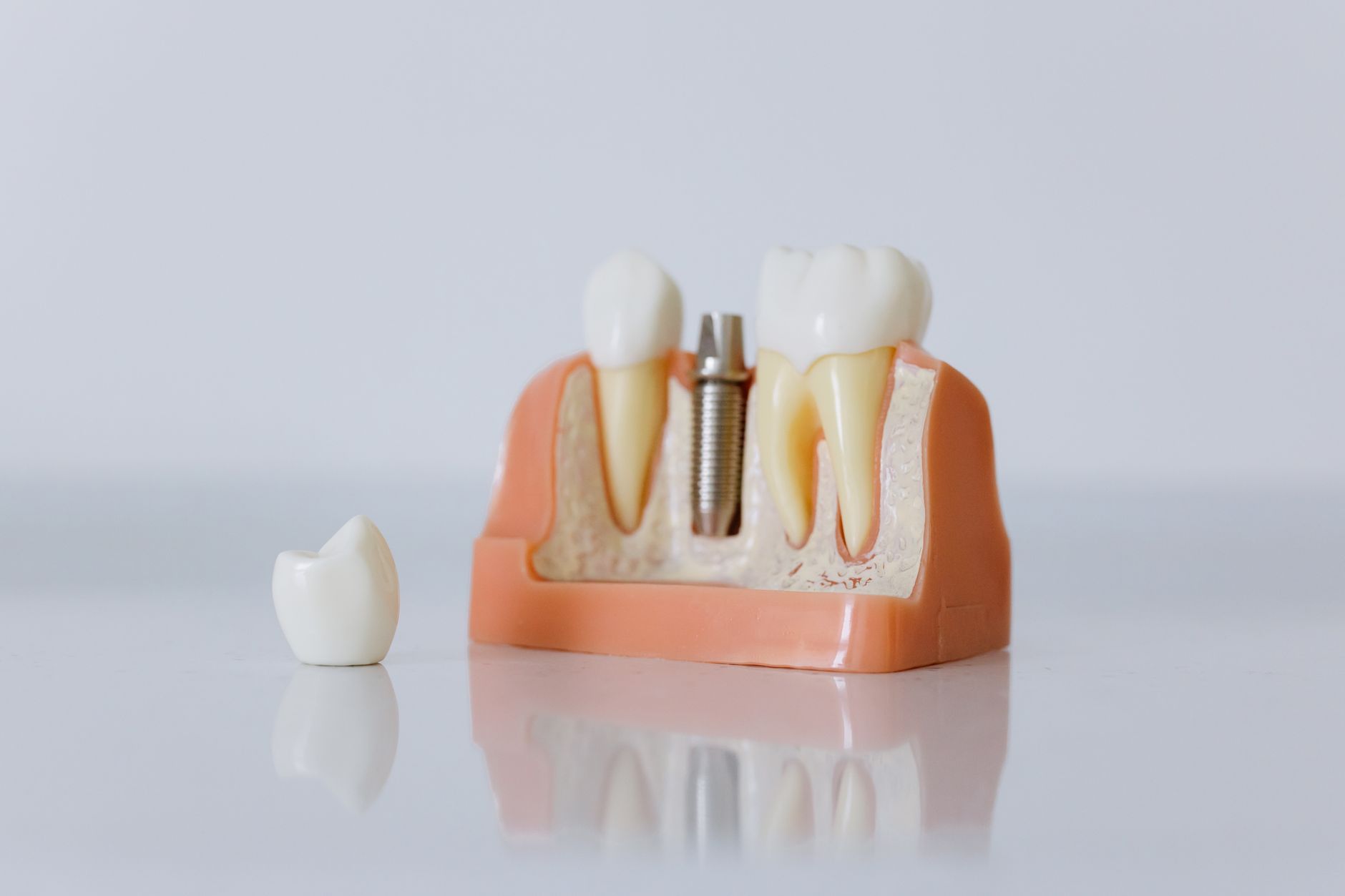
The implants are small titanium posts placed in the jawbone. Once the bone has healed around them, attachments on top of the implants hold the denture in place, so it is far less likely to lift or slide when you eat or talk.
Because the denture is still partly carried by the gums, it needs fewer implants than a fixed bridge. That is the main reason people ask about it: it can steady a loose denture with less surgery. Our page on the implant supported overdenture treatment we offer in Burwood covers the steps from consultation to fitting.
Removable or fixed?
If you want teeth you never take out, you are asking about a fixed full arch bridge, which needs more implants. An overdenture stays removable. We explain both at a consultation, along with options that involve no implants at all.
Why two implants is the usual plan for a lower overdenture
A lower denture is the one people struggle with most, because the tongue and cheeks push it about and there is no palate to help it grip. In 2002 a panel meeting at McGill University concluded that a two implant overdenture should be the first choice for people with no lower teeth, ahead of a conventional denture. A review of the McGill consensus published in 2011 describes the two implant overdenture as the standard of care for the toothless lower jaw.
That position has held. A 2014 systematic review by Raghoebar and colleagues describes overwhelming evidence that a two implant overdenture is the first choice for the edentulous lower jaw.
When two lower implants are usually enough
The Dutch dental knowledge institute’s 2019 clinical practice guideline on lower overdentures recommends two implants for people with no lower teeth who need an overdenture. It notes that two implants means less surgery, while four spreads the load across more implants, and that both have drawbacks.
When the lower jaw may need four implants
The same guideline says more than two can be recommended in particular circumstances:
- Very thin bone, which the guideline puts at less than 10 mm of height.
- Natural teeth in the upper jaw biting against the lower denture, fully or partly.
- An unusual jaw relationship, where the lower jaw sits well behind or well ahead of the upper.
- Pain rather than looseness, such as thin, tender gums rubbed by the denture, where more implants take load off the gum.
What about a single implant?
A single implant in the middle of the lower jaw has been studied as a simpler, lower cost option. A 2022 systematic review of one and two implant overdentures describes it that way, while noting that two implants remain the standard of care. It is not where we would usually start.
Why an upper overdenture usually needs four or more implants
The upper jaw is different in two ways. Its bone is often softer than the lower jaw’s, and it tends to shrink back after teeth are lost. A 2021 systematic review by Di Francesco and colleagues points out that, unlike the lower jaw, there are no clear clinical guidelines on the ideal number of implants for an upper overdenture, and that poor bone quality and quantity can lead to implants being lost.
Upper dentures also have an advantage the lower ones do not: the plate across the palate helps them stay put. Some people want implants so that plate can be cut back, which usually means more implants rather than fewer.
The sinus question
The sinuses sit above the back of the upper jaw. If there is not enough bone there, an implant may need a sinus lift procedure first. The Di Francesco review of 2021 noted that keeping upper implants towards the front, where the bone allows, can often avoid that extra surgery.
Four or six upper implants
The Di Francesco review pooled 15 studies with one to ten years of follow-up. It reported mean implant survival of 97.7% with four implants joined by a bar and 98.3% with six, with no statistically significant difference, and concluded that a bar overdenture on four implants is not inferior to one on six. Those are averages across the studies in the 2021 BMC Oral Health meta-analysis, not a prediction for any one person.
Joined with a bar or standing alone
Whether the upper implants are joined seems to matter. The Raghoebar review in 2014 reported implant survival of 98.1% per year with six or more implants joined by a bar and 97.0% with four or fewer joined by a bar. Where four implants were left standing alone with ball or locator attachments, implant survival fell to 88.9% per year, and the authors flagged a higher risk of losing implants with that design (Raghoebar et al, European Journal of Oral Implantology).
Wondering how many implants your denture would need?
Book a consultation in Burwood. We examine your mouth, take a 3D scan, explain the options including the ones without implants, and give you a written estimate.
How the attachment type changes the number of implants
The implants are only half the plan. What sits on top of them decides how the denture grips and how much maintenance it needs.
- Ball attachments: a ball on each implant clicks into a socket inside the denture. Simple and easy to clean around.
- Locator style attachments: a low, flat attachment with a replaceable nylon cap in the denture. Lower profile than a ball.
- A bar: a metal bar joins the implants and the denture clips onto it. It shares the load between implants and is the usual choice when upper implants are used.
| What the research says | Source |
|---|---|
| For lower overdentures there is no clear preference between ball and bar in most people | Dutch guideline, 2019, recommendation 9 |
| A bar may give more stability in the lower jaw when bone is very thin, upper teeth are natural or the jaw relationship is unusual | Dutch guideline, 2019, recommendation 11 |
| Cylindrical (locator style) attachments start with more grip than balls, but the advantage shrinks as they wear | Wakam et al, 2022 |
| Upper implants joined by a bar showed higher implant survival than four implants standing alone | Raghoebar et al, 2014 |
What decides the number of implants at your consultation
Nobody can tell you how many implants you need from a photo or a phone call. These are the questions we work through, in roughly this order.
- Your health and history. Smoking, diabetes and past gum disease all affect healing and the risk of problems around implants later, so we ask about them first.
- An examination and a 3D scan. A cone beam CT scan shows bone height and width and where the nerve in the lower jaw and the sinuses in the upper jaw sit.
- The teeth opposite. The Dutch guideline treats natural upper teeth biting against a lower overdenture as a reason to consider more than two implants.
- Your current denture. If it is worn or poorly fitting, a new conventional denture may solve the problem without surgery. If implants go ahead, the denture is usually remade or adapted.
- Whether bone needs building up. Thin bone may need bone grafting before or alongside implants, which adds surgery and healing time.
- Your hands and your routine. Some people find separate attachments easier to clean around than a bar, so how you manage at home is part of the choice.
What changes the cost of an overdenture
We do not publish a fee for overdentures, because the plan changes so much from one person to the next. What moves the cost is the number of implants, whether bone grafting or a sinus lift is needed, any extractions first, the attachment type, whether a new denture is made, and the scans. You get a written estimate after the consultation, and our payment options page explains how fees can be spread.
Overdenture implant risks, results and the alternatives
Placing implants is surgery, and it carries risks whatever the number of implants. We go through these with you before anything is booked, and you are welcome to take a written plan away for a second opinion.
- Infection at the implant site after surgery.
- Nerve injury. In the lower jaw, damage to the nerve that supplies the lip and chin can cause numbness, altered feeling or pain, and a 2011 literature review on nerve injury during implant placement calls it a serious complication. Careful planning on a 3D scan is how the risk is reduced.
- Sinus involvement with upper implants, especially near the back of the jaw.
- Implant failure. An implant may not join with the bone, or may loosen later, and need to be removed.
- Peri-implantitis, an infection that destroys bone around an implant. A 2022 meta-analysis of peri-implantitis prevalence estimated it at about 20% at patient level, with smoking, poor cleaning, diabetes and past gum disease named as likely risk factors.
- Wear and repairs. Attachments loosen with use and need replacing, and the denture itself may need relining or remaking.
Results vary from person to person
The survival figures above are averages from groups of people in studies. Your own result depends on your bone, your health, how well the implants and denture are cleaned and how you bite. Implants are not suitable for everyone, and that is decided after an examination.
Alternatives to an implant overdenture
These are the main alternatives, and we talk through each of them at a consultation. Depending on your case, you may be referred to a prosthodontist or an oral surgeon for part of your care.
- A new or relined conventional denture. The Dutch guideline recommends a new conventional denture for people without functional complaints, and the Victorian Government’s Better Health Channel page on dentures notes that dentures may need relining or replacing as the gums change. Our page on replacing a loose denture covers this.
- A fixed bridge on implants, such as All-on-4 treatment, which needs more implants and more surgery.
- A partial denture or a tooth-supported bridge, if you still have some healthy teeth.
- Doing nothing for now, which is a reasonable choice if your denture is comfortable enough for you.
Looking after an implant overdenture
An overdenture asks for a little more care than a conventional denture, because there are now implants under it to keep clean as well.
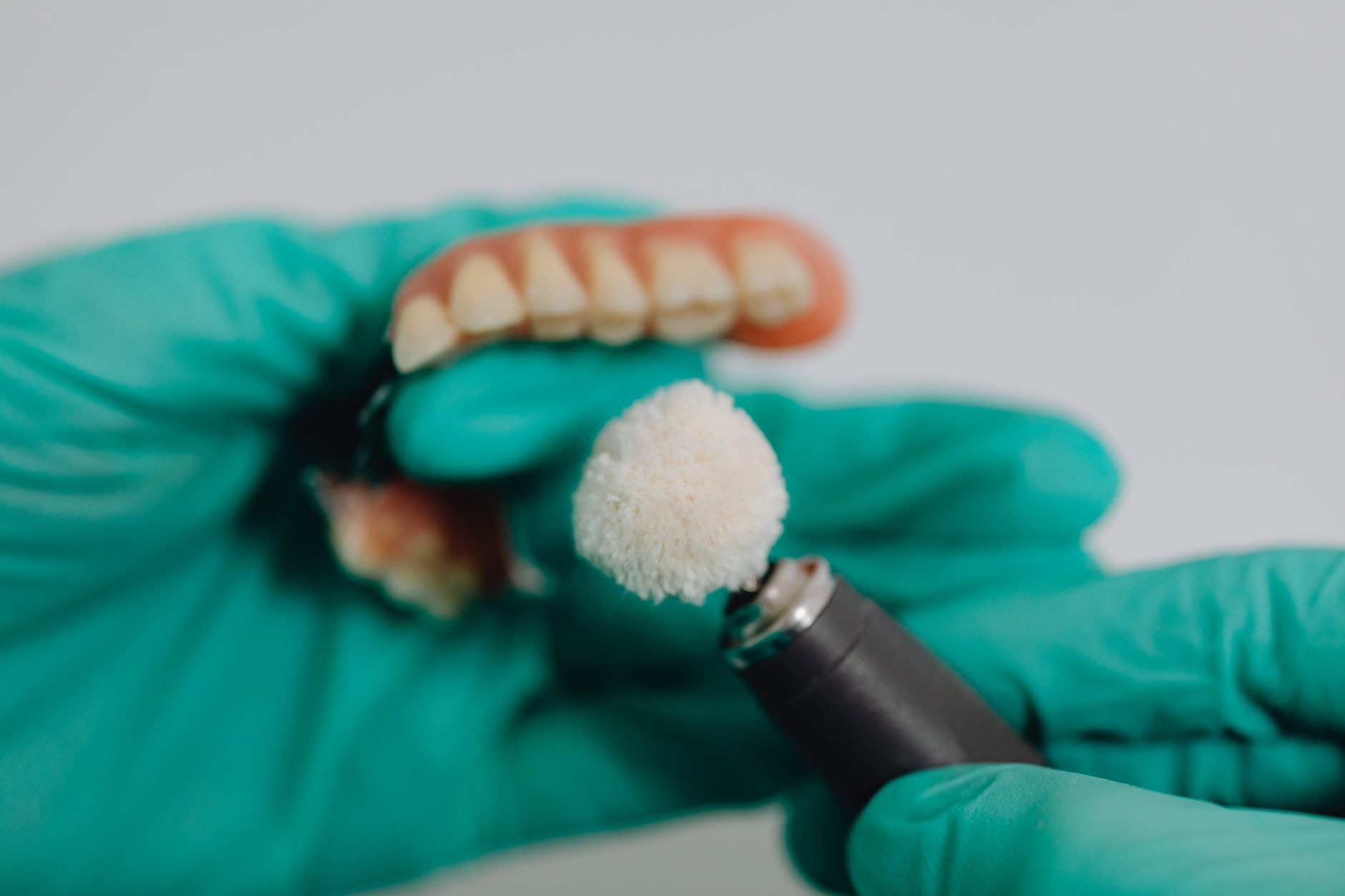
- Take it out and clean it daily, along with the attachments in your mouth. The Better Health Channel advises against cleaning dentures with toothpaste or hot water.
- Leave it out overnight unless you are told otherwise, which gives the gums a rest.
- Expect to replace the clips or nylon caps. The 2022 Wakam review found that wear and loss of grip is the most common reason overdentures need maintenance, and estimated an average of about 11 months between activations or replacements.
- Keep your check-ups. Regular reviews let us check the gums around each implant and pick up peri-implant problems early.
Common questions
Can an overdenture work with only two implants?
For the lower jaw, yes: two implants is the usual starting point and has been the recommended first choice since the McGill consensus in 2002. For the upper jaw, two is not the usual plan, and most published work looks at four or six.
Why does the upper jaw need more implants than the lower?
Upper jawbone is usually softer and thinner, which makes implants there more likely to be lost. Joining four or more implants with a bar spreads the load, and reviews have reported better implant survival with that design than with four implants standing alone.
Is an implant overdenture removable?
Yes. It clips onto the implants and you take it out to clean it and usually to sleep. A fixed bridge, such as All-on-4, is the option that stays in.
Can I use my current denture on new implants?
Sometimes an existing denture can be adapted to take attachments, but often a new one is made so it fits the implants and your gums properly. We check your denture at the consultation and tell you which applies.
How long does an implant overdenture take?
It depends on your bone and whether grafting is needed. The implants need time to heal into the bone before the denture is clipped on, and that healing period is planned around your case.
Does having more implants mean a better result?
Not necessarily. A meta-analysis published in 2021 found no significant difference in implant survival between four and six joined upper implants. More implants mean more surgery and more cost, so the aim is the number your jaw and bite actually need.
The short version
A lower overdenture usually needs two implants and an upper one usually needs four or more, often joined by a bar. Your bone, the teeth opposite, your bite and your health decide the final number.
- Two lower implants is the long-standing first choice; four is considered for thin bone, natural upper teeth or an unusual bite.
- Upper overdentures usually use four or six implants, and joining them with a bar is linked with better implant survival.
- Attachments wear and need replacing, and the implants need daily cleaning and regular checks.
- Implants are surgery with real risks; a new conventional denture, a fixed bridge or no treatment are all alternatives, and a second opinion is welcome.
Talk to us about an overdenture in Burwood
We see patients from across Sydney at our Burwood clinic. Book a consultation and we will tell you how many implants your jaw would need, what the risks are, and what the alternatives look like.
Book a consultation Call (02) 9739 1400
(02) 9739 1400 · Burwood
Sources
- Two implant overdenture: the first alternative treatment for patients with complete edentulous mandible (Melescanu Imre et al, 2011), Journal of Medicine and Life
- A systematic review of implant-supported overdentures in the edentulous maxilla, compared to the mandible: how many implants? (Raghoebar et al, 2014), European Journal of Oral Implantology
- Patient satisfaction and survival of maxillary overdentures supported by four or six splinted implants: a systematic review with meta-analysis (Di Francesco et al, 2021), BMC Oral Health
- CPG implant supported overdentures in the edentulous lower jaw, summary, version 1.0 (2019), Kennisinstituut Mondzorg (KIMO)
- Evaluation of retention, wear, and maintenance of attachment systems for single- or two-implant-retained mandibular overdentures: a systematic review (Wakam et al, 2022), Materials
- What is the prevalence of peri-implantitis? A systematic review and meta-analysis (Diaz et al, 2022), BMC Oral Health
- Injury of the inferior alveolar nerve during implant placement: a literature review (Juodzbalys et al, 2011), Journal of Oral and Maxillofacial Research
- Dentures, Better Health Channel, Victorian Government
This article is general information only and is not a substitute for advice about your own teeth from a registered practitioner. Implant treatment is surgery and carries risks, results vary from person to person, and whether it suits you can only be decided after an individual examination. A second opinion is always reasonable.